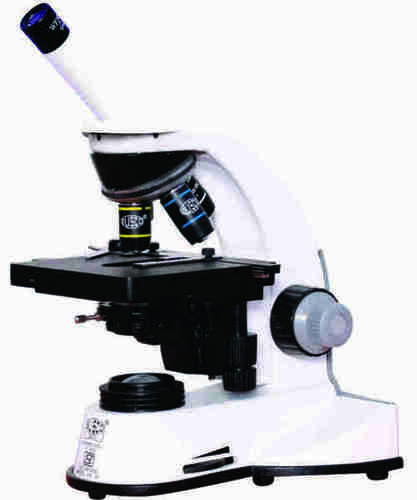
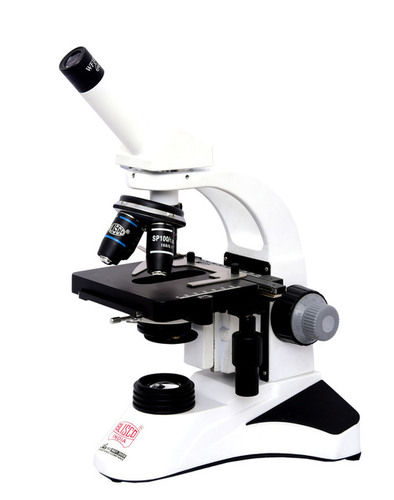
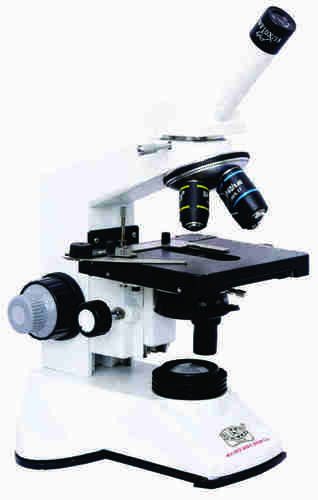
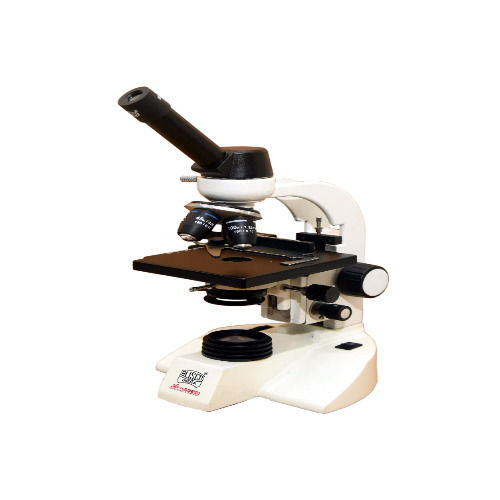
Pathological Monocular Microscope MEDILUX-SM/50 About
Ergonomic designed SingleMold Low Drive Coaxialmechanismfor comfortable basedonballbearingandwireguides
ViewingBodies Monocular Binocular or Trinocular any one observation Head inclined atNosepieceQuadrupleforcenteredalignmentofobjectives
FocusingCoaxial Coarse ne Movement slides smoothly on Ball Bearing Guide Ways which providesthehighestDegreeofsensitivemorethantwomicronsnefocusingreadingto0002freefrombacklashMechanicalStageCondenserPrecenteredAbbecondenserNA 125withasphericlens withIrisdiaphragmBuiltinswingoutlterholderupdownmovementthroughrackpiniononstainlesssteelguides
IlluminationHeavy rectangular sturdy base with built in LEDIllumination Battery backupoptionalorhalogenlamponoffswitchcontinuouslyvariablelightintensitycontrolledregulatorquickchangebulbprovisionworkableon110240v50HzAC
Advanced Optics for High PrecisionFeaturing achromatic-corrected objectives and a wide field optical system, the MEDILUX-SM/50 ensures clear, distortion-free images crucial for pathology and microbiology work. The 10X, 45X, and 100X objectives, paired with the 10X eyepiece, deliver magnifications up to 1000X. The iris diaphragm and Abbe condenser provide fine-tuned control over illumination for professional results.
Durable Design & User-Friendly FeaturesDesigned with a die-cast aluminum body, rugged anti-fungal optics, and a scratch-resistant, baked enamel finish, this microscope is built for longevity in busy labs. The monolithic frame integrates coarse and fine focusing adjustments, an ergonomic mechanical stage, and is supplied with essential accessories for convenience and protection.
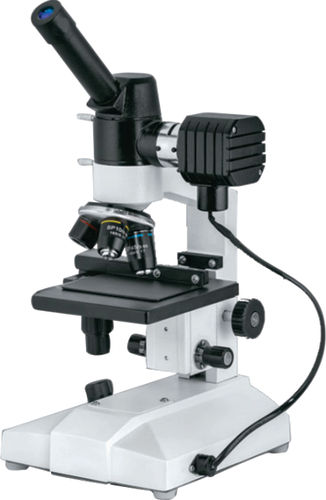
Flexible Illumination & Accessory OptionsThe built-in plano-concave mirror ensures reliable natural light illumination, while optional LED or halogen attachments expand application in varied lighting environments. Accessory options such as camera adapters and additional lenses enable adaptability for documentation, teaching, or advanced research tasks.
FAQ's of Pathological Monocular Microscope MEDILUX-SM/50:
Q: How is the MEDILUX-SM/50 microscope used for pathological studies?
A: The MEDILUX-SM/50 microscope is ideal for pathological studies, providing up to 1000X magnification with achromatic objectives and a wide field eyepiece. Its precise mechanical stage and adjustable iris diaphragm support detailed, high-contrast examination of tissue samples and cellular structures, essential in pathology labs and educational settings.
Q: What are the benefits of the die-cast aluminum body and chemical-resistant finish?
A: The die-cast aluminum construction gives the microscope exceptional durability and stability, critical for consistent laboratory use. The baked enamel, chemical-resistant coating protects it from stains, scratches, and harsh cleaning agents, ensuring longevity and a professional appearance in demanding environments.
Q: When would I require optional LED illumination with this microscope?
A: Optional LED illumination is recommended in settings with insufficient ambient natural light or when consistent, adjustable lighting is required for extended examination sessions. The LED or halogen options provide uniform illumination, minimizing strains during prolonged microscopic observations.
Q: Where can this microscope be effectively employed?
A: This model is suitable for pathological, bacteriological, and general educational laboratory use. It is widely used in hospitals, diagnostics labs, research institutions, schools, and colleges, thanks to its robust build, ease of operation, and adaptable accessorizing.
Q: What is the process for focusing and adjusting specimens?
A: The microscope features coaxial coarse and fine focus knobs for precise adjustment. The mechanical stage's X-Y controls enable smooth and accurate slide positioning, while the iris diaphragm allows easy modification of light intensity for optimal specimen contrast.
Q: How do accessory options, like camera adapters, enhance usage?
A: Camera adapters enable users to capture and document microscopic images for research, teaching, or collaboration. Additional objectives can further customize magnification levels, allowing the microscope to adapt to various study protocols and educational needs.






 Send Inquiry


 Send Inquiry