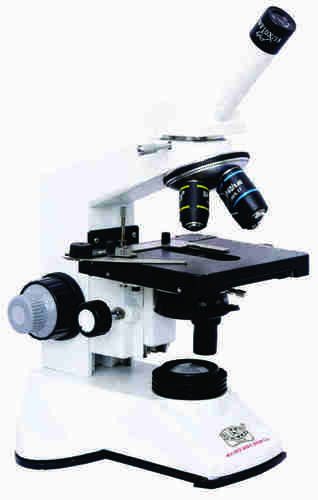
About Pathological Monocular Microscope
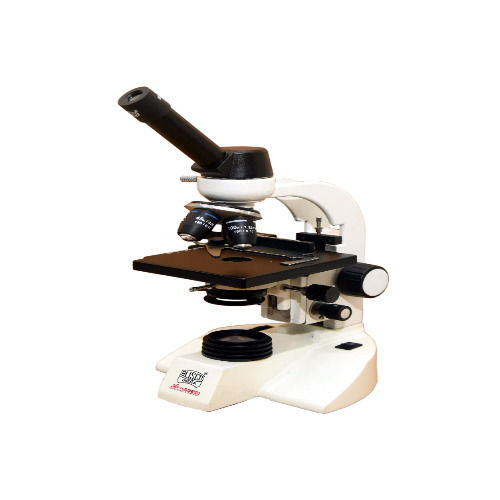
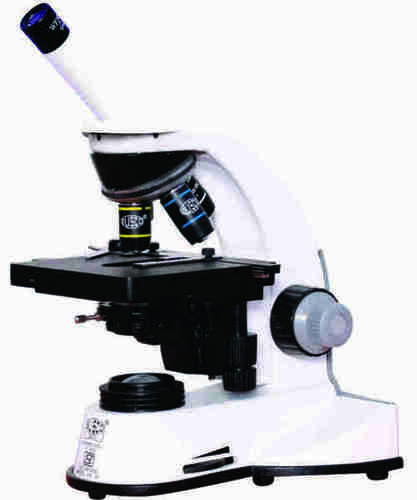
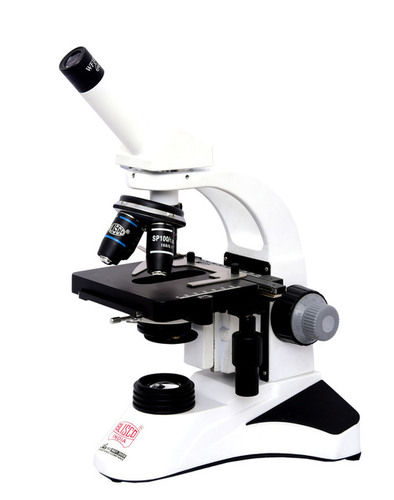
-Thebodyiswelldesigned,MetalBodiedbiologicalmicroscopeforStudentsinMedicalcollegesViewingBodies:-ObservationHeadinclinedat45,rotatable
Nosepiece:-Smoothrevolving,quadruplenosepiecewithRubbergrip,positivestopsforcenteredFocusing:lockingdevicetoprotectvaluableslides.
MechanicalStage: - Low driveHorizontal coaxial mechanical stage of 145 x 140 mm.-AbbeN.A.1.25&irisdiaphragmwithbuiltinswingoutilterholderandup-downIllumination:switch,continuouslyvariablelightintensitycontrolled regulator.Suitablefor220V,50HzACsupply.
Packing:-completewithduster,cover,Necessarycords&cables&instructionmanual.
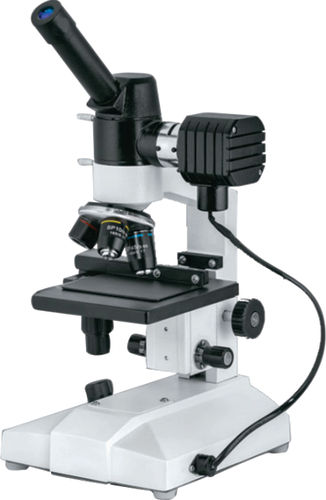
Versatile Pathological AnalysisWith a full range of achromatic objectives and a wide magnification span from 40x to 1000x, this microscope adapts to various pathological examinations. The 45 angled monocular tube enables ergonomic viewing, reducing strain during extended sessions. It is ideal for medical, educational, and research applications.
Advanced Illumination for ClarityEquipped with an LED light source that allows brightness adjustment, the microscope delivers optimal visibility for all specimen types. The integrated Abbe condenser and iris diaphragm provide consistent contrast and illumination control, ensuring accurate and detailed observations.
Precision Stage and Focusing SystemThe double-layer mechanical stage with X-Y movement ensures effortless navigation across slides. Combined with a fine (0.3mm) and coarse (15mm) adjustment range and a 30mm focus range, users can achieve sharp, precise focus on specimens of various thicknesses.
FAQ's of Pathological Monocular Microscope:
Q: How do I use the monocular drawtube for optimal viewing comfort?
A: The 45 inclined monocular drawtube is designed to minimize neck strain while viewing specimens. Position the microscope so that your eye aligns comfortably with the eyepiece, and adjust the height of your chair or table if necessary for sustained ergonomic use.
Q: What is the benefit of the LED illumination with adjustable brightness?
A: LED illumination provides consistent, bright, and cool light, which is gentle on specimens and the eyes. The adjustable brightness feature allows you to tailor the lighting conditions based on specimen transparency, ensuring high-quality images in various lighting environments.
Q: Where can this monocular microscope be effectively used?
A: This microscope is suitable for a variety of settings including pathology labs, schools, colleges, clinical research centers, and industrial laboratories. Its robust construction and advanced features cater to both educational demonstrations and professional analyses.
Q: What objectives are included, and how does magnification work?
A: The microscope comes with achromatic objectives (4x, 10x, 40x(S), and 100x(S oil)), allowing a magnification range of 40x to 1000x when used with the 10x widefield eyepiece. To switch magnification, simply rotate the nosepiece to the desired objective, ensuring secure placement for clear viewing.
Q: How does the Abbe condenser with iris diaphragm enhance image quality?
A: The Abbe condenser, paired with an iris diaphragm, enables precise control over light focus and intensity. This flexibility allows users to adjust contrast for different specimens, producing clearer and more detailed observations under various magnifications.
Q: What is the process for focusing on a specimen with this microscope?
A: Begin with the coarse adjustment knob to bring the specimen into general focus, then use the fine adjustment knob, which allows for a 0.3mm range, for sharp and detailed focusing. Always start with the lowest magnification and gradually increase as needed for detailed study.
Q: What advantages does the double-layer mechanical stage provide?
A: The double-layer mechanical stage with X-Y movement allows for smooth, controlled navigation across slides without repositioning, making it easier to locate and examine specific specimen areas quickly and efficiently.






 Send Inquiry


 Send Inquiry