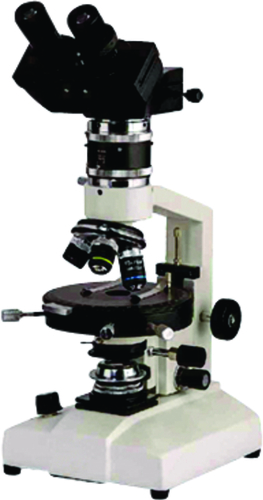
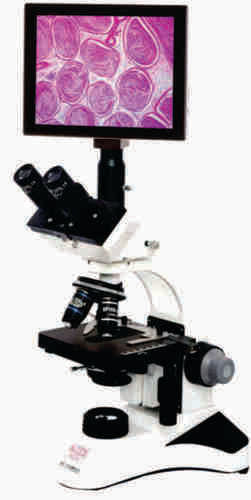
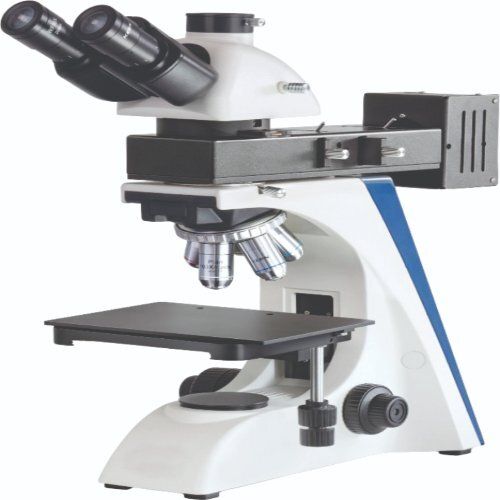
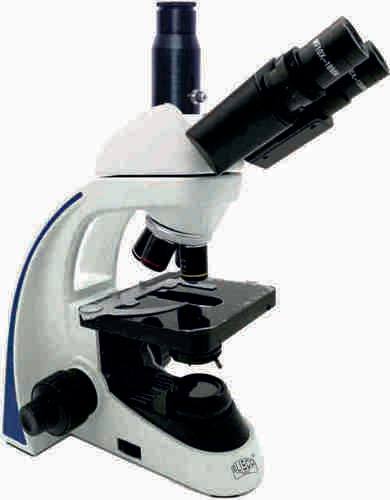
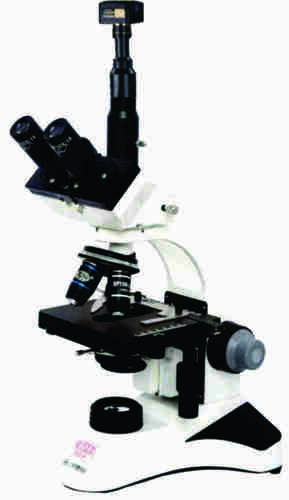
Trinocular Polarising Microscope Model-15T About
ObservationHead SiedentopfBinocular observation head inclined at 30 5 and rotatable at 360DiopteradjustmentringonoculartubeInterpupillarydistancefrom55mmto75mm
EyepieceAntifungus
Objectives PlanAchromatic 4XEPlanAchromatic 10XEPlanAchromatic 40X SLEPlan Achromatic100XSL
MechanicalBody and PreFocusing Lever It has Coaxial focusing system It also includes PrerevolvesonballbearingTheCrossmovement55mmX75mm
RevolvingStage
AnalyzerOpticalCompensator
Polarizer
Standard Accessories Blue Filter fuse operating manualvinyl dust cover guarantee card StyrofoammoldedpackSpecicationssameasaboveModelRPM15butttedwithtrinocularobservationheadSpecicationssameasaboveModelRPM15butttedwithtrinocularobservationhead
Advanced Polarising Optics for Precise AnalysisThe Model-15T offers high-quality strain-free achromatic objectives and a rotatable polariser-analyzer system, ideal for specialty applications in geology and material sciences. Its Bertrand lens enables conoscopic observation for detailed crystal studies, while precision controls ensure accurate sample positioning and analysis.
Enhanced Imaging Versatility and ConnectivityWith a trinocular drawtube inclined at 30, the microscope accommodates direct observation and digital documentation. Compatible with standard digital and CMOS cameras via a C-mount, it is designed for flexible imaging workflows in research or educational settings. Magnification can reach up to 1000X with optional objectives.
Rugged Construction and Ergonomic DesignBuilt with a sturdy metal frame, anti-vibration base, and anti-fungal optical components, the Model-15T resists harsh lab conditions. Intuitive, precision adjustments, a smooth rotating graduated stage, and comfortable viewing ergonomics make extended sessions efficient and fatigue-free.
FAQ's of Trinocular Polarising Microscope Model-15T:
Q: How is the Trinocular Polarising Microscope Model-15T used for geological and material science applications?
A: This microscope is designed specifically for examining minerals, rocks, and materials using polarised light. The rotatable polariser, analyzer, and in/out swing Bertrand lens allow for detailed optical property analysis and conoscopic observations, making it ideal for geology, petrology, mineralogy, and material science research.
Q: What are the key benefits of the Model-15T's polarising and rotation features?
A: The 360 rotatable polariser and analyzer enable precise control of polarised light for birefringence and interference pattern observations. This helps researchers study optical characteristics of anisotropic materials and detect subtle structural properties in samples.
Q: How do you connect a camera or PC to the Model-15T for imaging?
A: The trinocular port features a standard C-mount interface, allowing you to attach most digital or CMOS cameras. This facilitates direct image and video capture for documentation, analysis, and sharing results during research or teaching.
Q: What measures are in place to protect the microscope from environmental factors?
A: The Model-15T features anti-fungus coated optical elements and a dustproof frame, providing durable performance even in humid or dusty environments. These protective measures help maintain optical clarity and extend the instrument's lifespan.
Q: When should the included Bertrand lens be used during observation?
A: The Bertrand lens is used for conoscopic (interference figure) observation, which is essential when analyzing the internal structure of crystals. Engage it when you need to examine the optical orientation or birefringence patterns in a sample.
Q: What accessories and spare parts are provided with the microscope?
A: The package includes an accessory kit, calibration slide, instruction manual, power cord, halogen lamp, fuse, blue filter, immersion oil, and a dust cover. These components ensure you are fully equipped for immediate setup and ongoing maintenance.
Q: Where can the Model-15T be beneficially deployed?
A: This microscope is best suited for research labs, universities, geology institutes, material science departments, and industrial laboratories involved in petrographic analysis or quality control.





 Send Inquiry


 Send Inquiry