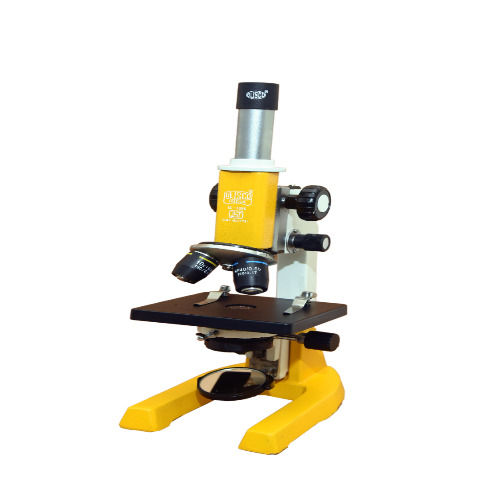
Student Polarising Microscope Model SPM-10 About
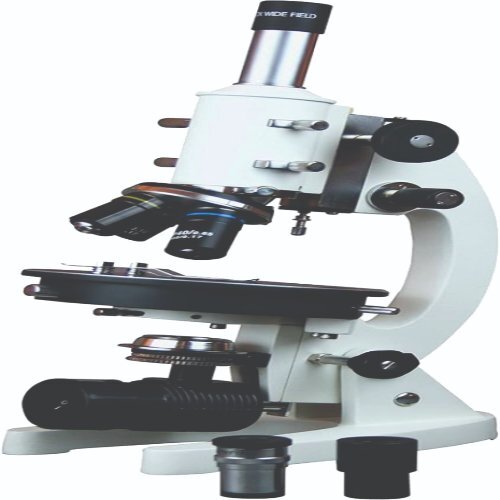
Student inclinable body havinggraduated coarse and ne focusing knobs having 360 Circular rotatablestage Full wave wave compensating plates Bertrandlens sliding type removable analyzer from opticalpathand360swingoutpolarizerwithdaylightreectingmirrorillumination
Exceptional Optical PerformanceEquipped with achromatic objectives and widefield 10x eyepieces, the SPM-10 delivers clear, high-contrast images essential for studying geological and mineral samples. Its focusing system-combining coarse and fine adjustments-allows precise and effortless focusing over a range suitable for various magnifications and specimen thicknesses.
Designed for Academic VersatilitySPM-10's rotating stage, polariser and analyser setup, and Bertrand lens make it a versatile tool for multiple fields: mineralogy, crystallography, earth sciences, and more. Its build and accessories suite-including dust cover, spare fuse, and cleaning cloth-support demanding student and research applications in educational labs.
User-Friendly ConstructionMade for student use, the SPM-10 pairs comfort with durability. The monocular inclined tube reduces neck strain, while the die-cast metal body with anti-rust finish ensures longevity. With simple operation and manual controls, users can focus on practical studies without complex setup procedures.
FAQ's of Student Polarising Microscope Model SPM-10:
Q: How do I use the Student Polarising Microscope Model SPM-10 for mineral identification?
A: To identify minerals, place a thin specimen on the rotating stage, adjust the mirror for optimal illumination, and use the built-in polariser and analyser for observing under polarized light. The rotating stage and vernier scale aid in detailed crystal examination, while objectives from 4x to 40x enable different magnifications.
Q: What are the unique benefits of the SPM-10's rotating stage and vernier scale?
A: The 360-degree rotating stage with a vernier scale allows for accurate angular measurement and orientation of samples, vital for crystallography and structural mineral studies. This feature helps students record precise optical properties efficiently.
Q: When should I use the Bertrand lens during observation?
A: The Bertrand lens is used for conoscopic observation, which provides interference figures essential in mineral and crystallography analysis. Use it when examining optical relationships within transparent samples or when polarization patterns are needed.
Q: Where can this microscope be effectively used?
A: The SPM-10 is ideal for educational settings such as university laboratories, geology or earth science classrooms, and research institutes requiring polarized light studies of rocks, minerals, or crystals.
Q: What is the process for changing objectives or filters on the microscope?
A: Switching objectives is simple with the quadruple revolving nosepiece; gently rotate to align the desired magnification. Polarising and analysing filters, as well as objectives and eyepieces, can be replaced or upgraded using compatible spare parts provided by the manufacturer, supplier, or exporter.
Q: How does the illumination system work on the SPM-10?
A: The microscope uses a plano-concave mirror to direct incident or transmitted light onto the specimen. You can further enhance illumination with an external lamp, and the Abbe condenser with iris diaphragm ensures precise light control for various sample types.
Q: What accessories are included with the SPM-10 microscope?
A: Included accessories are a dust cover, cleaning cloth, user manual, power cord (with models supplied with a lamp), and a spare fuse (for electric versions), supporting safe and convenient operation.






 Send Inquiry


 Send Inquiry