Disseting Microscope Bull Eye Lense About
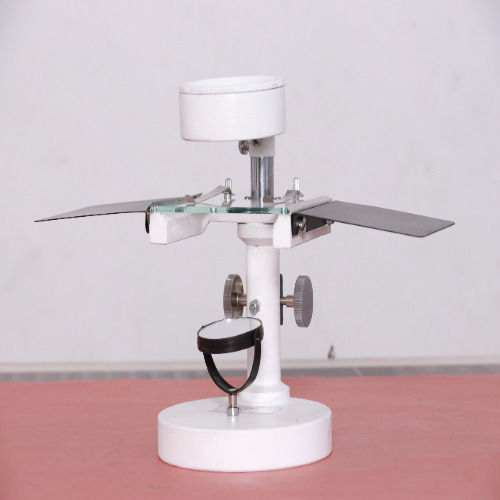
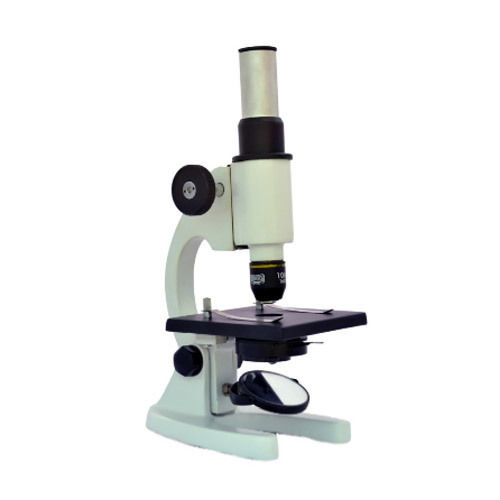
Heavy round base with a precisely desigend body, providing convenience for easy lifting and movement. sensitive focusing is done by rack-pinion moving on a lapped dovetailed guide. A joint revolving arm is provoded for moving magnifying lens over full area of the stage ;it is easily replaceble by a special BULL EYE LENS 83MM .dia to increase the field of vision. A plano -concave mirror fitted in fork for inseting white or black plate for respective background help easy working on the instrument .note; extra charge for wooden box.
Sturdy Construction for Reliable UseConstructed with a solid metal base and stand, the Dissecting Microscope with Bull Eye Lens is built to withstand frequent handling in educational and laboratory settings. Its heavy base ensures stability while the brass joint swivel arm allows for precise, adjustable positioning.
High-Quality Optical Glass LensThe microscope features a large convex optical glass lens that provides clear, distortion-free magnification. With lens diameters typically around 75 mm and magnification up to 5x, it is tailored for close inspection of biological specimens, coins, stamps, or intricate objects.
Simple, Manual OperationThis model employs a manual vertical adjustment screw to raise or lower the lens, enabling users to focus easily on specimens. The open design with a glass stage allows for direct observation without digital components or built-in lighting.
FAQ's of Disseting Microscope Bull Eye Lense:
Q: How do I focus specimens using the Dissecting Microscope Bull Eye Lens?
A: Focus is achieved by manually adjusting the vertical screw, which raises or lowers the lens relative to the stage. This allows users to obtain a sharp image depending on the size and position of the object.
Q: What types of applications is this microscope suitable for?
A: It is ideal for use in botany, zoology, elementary pathology, entomology, and for examining coins or stamps. Its low magnification and broad field of view make it especially useful for specimen dissection and visual inspection.
Q: When is external lighting required with this microscope?
A: Since the microscope does not have a built-in light source or condenser, it relies on ambient or external lighting. Use it in well-lit environments or with an external lamp to ensure clear specimen visibility.
Q: Where can this microscope be effectively used?
A: This microscope is suitable for schools, university labs, research institutes, and personal collections. Its portable, durable design allows it to be conveniently set up and used in multiple locations.
Q: What is the typical magnification and focal distance provided?
A: The bull eye lens generally offers 2x to 5x magnification, with a focal distance adjustable between approximately 75 and 150 mm, making it ideal for observing larger specimens or conducting dissections.
Q: How do I maintain and replace spare parts?
A: Spare parts such as the bull eye lens, support rod, and glass stage are available separately. Routine cleaning of the lens with appropriate optical cloth and gentle handling of all components will help prolong the microscope's lifespan.
Q: What are the main benefits of using this microscope in educational settings?
A: It offers a hands-on, direct-viewing experience in the study of plant and animal materials, coins, and other objects. The manual operation fosters understanding of basic magnification principles and specimen examination without reliance on digital interfaces.






 Send Inquiry


 Send Inquiry